Feature film funding comes from combining investors, incentives, sales, and partnerships into one structured plan that closes the budget.
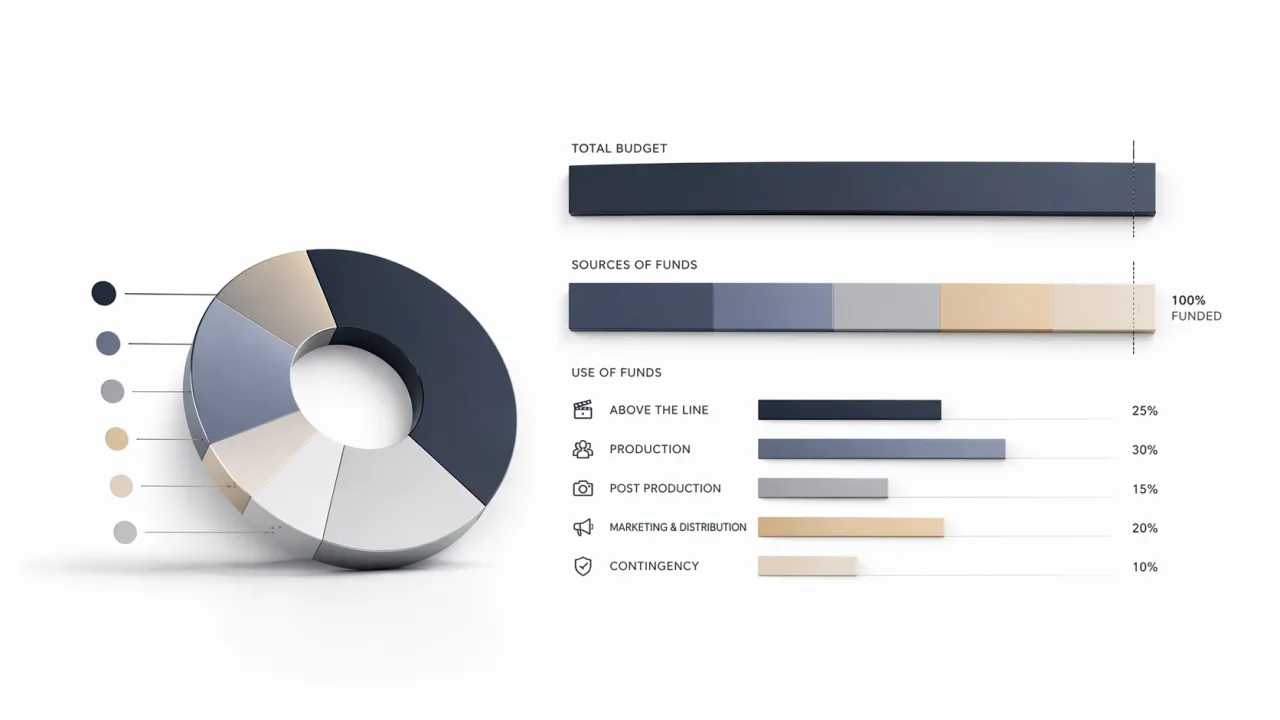
Feature films are financed by combining multiple sources. Each one plays a role in building the full budget and reducing risk.
The process starts with a clear package and moves forward by adding partners, investors, and market support step by step.
A feature film is structured around layers of finance that support each other.
How Feature Film Financing Is Built
- Private investors and equity provide upfront cash
- Tax incentives and regional funding reduce the net budget
- Pre-sales, broadcast, or distribution deals add market value
- Sponsorship and brand partnerships contribute cash or production support
- Gap financing can be used once sufficient value is in place
These elements are combined into one finance plan.
Typical Feature Film Funding Mix
- Private investors and equity
- Tax incentives and regional funding
- Pre-sales, broadcast licences, or negative pick-up deals
- Product placement, corporate sponsorship, or brand sponsorship
- Gap financing where applicable
Where Most Feature Films Start
Most features begin with positioning and package.
- A defined audience and genre
- A realistic budget and finance plan
- Location incentives that support the budget
- Cast, director, or producer attachments where possible
This forms the base for financing conversations.
How to Move Forward
- Define audience, budget band, and positioning
- Build a clear package with materials and attachments
- Start with funding that reduces cost or adds credibility
- Add investors, sales, or partnerships step by step
- Combine all sources into one structured plan
Feature Film Funding Structure Examples - Member Area