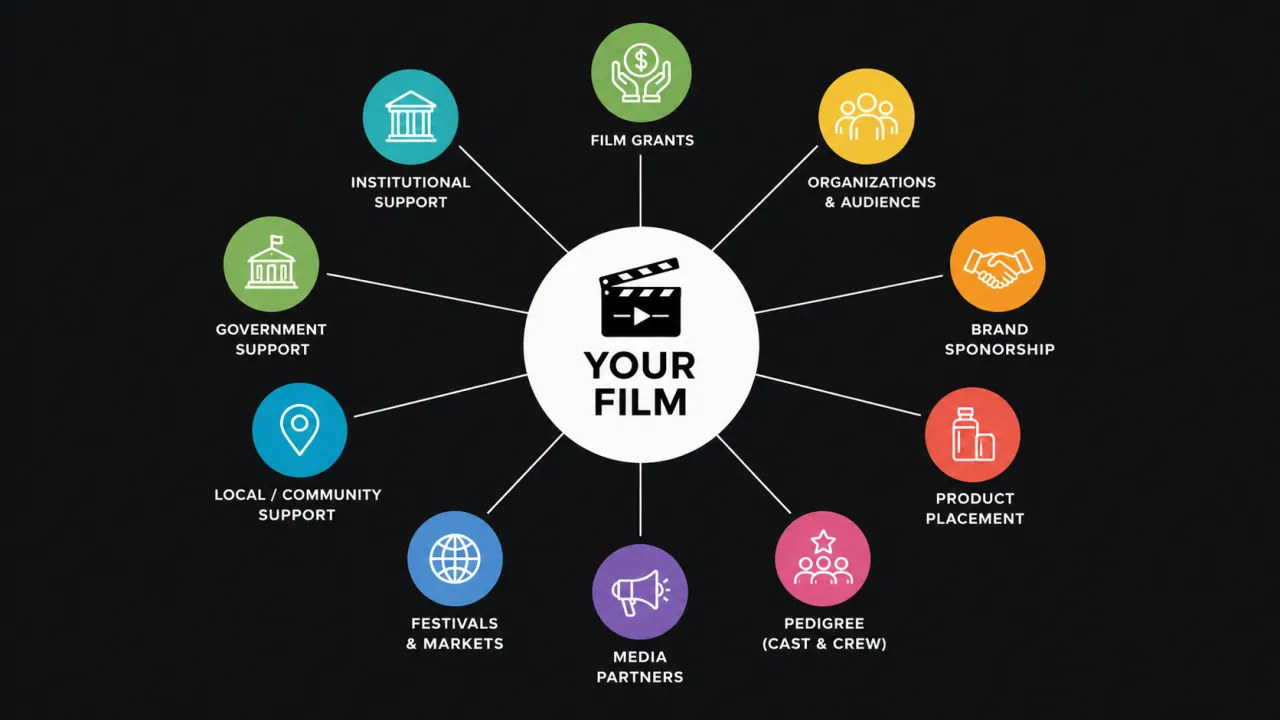
The film industry has changed. Distribution alone is rarely enough, and public funding is limited in many territories.
This system helps you build a practical funding plan around grants, partnerships, brands, product placement, media, and location-based support.
Add a few basic details about your film to generate relevant leads for your project and location. Then contact the people, companies, and organizations that fit.
Audience = Build Value
To get an in-built audience, contact umbrella organizations, NGOs, and institutions that already serve the same audience as your film, so they can become partners, champions, and credibility builders for the project, while also helping with promotion and support.
Subject = Branded Content
Contact brand agencies that might have clients that fit the subject of your film and want to use your set, cast, crew, and film environment to shoot branded content for money.
Product = Product Placement
Contact the companies to place their products naturally in the world of your film through product placement.
Film Type = Categorization
Your film type determines which grants, partners, festivals, and buyers are relevant to your project.
Film Budget = Deal Making
Your budget needs to be realistic. It shapes what level of partners, sponsors, investors, and support is possible, and helps you work out how each part of the funding plan fits into the whole.
Cast and Crew = Pedigree
The more pedigree you have on your project, the more seriously it will be taken. Strong cast and crew help build confidence, raise the level of the film, and support a higher budget.
City = Community Support
Think local. Approach companies, businesses, and people in your community because they are very likely to want to be involved with the film.
Country = Governmental Support
Your country determines the national grants, incentives, public support, and official industry bodies available to your film.
Region = Film Festivals and Markets
Your region helps identify nearby festivals, co-production markets, and regional opportunities beyond your own country.
Genre = Distribution
Your genre helps place the film with the right audience, the right festivals, the right buyers, and the right distribution category.
Film Grants
Contact the grant bodies to ask about eligibility, deadlines, and whether your film is a fit.
Organizations
Contact the organizations and institutions to see if they want to support, promote, and stand behind the project because they have the same audience.
Brand Sponsorship
Contact the brands to see if they want to use your set, cast, crew, and film environment to shoot branded content.
Product Placement
Contact the companies to see if they want to place their products naturally in the world of your film through product placement.
Pedigree
Contact experienced cast, crew, or representatives who can help raise the level and credibility of the film.
Media Partners
Contact broadcasters, platforms, streamers, publishers, and sales agents to explore support, promotion, licensing, or partnership.
Institutional Support
Contact film commissions, public bodies, and regional agencies to understand what support, permits, incentives, or practical help is available.
Tax Rebates and Incentives
Check what rebates and incentives are available based on where the film is being made and what can be claimed later.
Long-tail Distribution
Use the film’s genre, audience, and positioning to build income over time through platforms, territories, broadcasters, educational use, and niche audience sales.